TTVR
Transkateter Triküspit Kapak Replasmanı (TTVR), triküspit kapak darlığı veya yetersizliği olan hastalarda, açık kalp ameliyatına gerek kalmadan kateter yoluyla yeni…
What is TTVR?
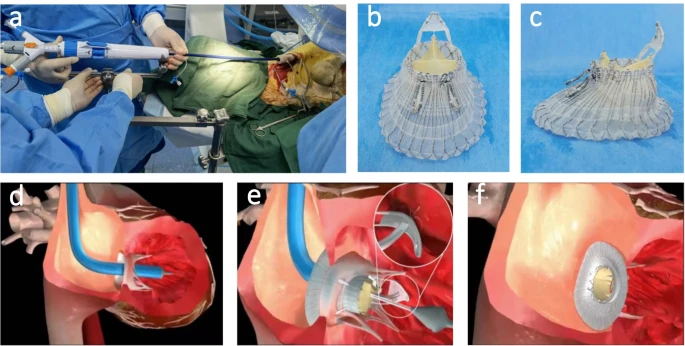
Transcatheter Tricuspid Valve Replacement (TTVR) is a procedure in which a new valve is placed via catheter without the need for open heart surgery in patients with tricuspid valve stenosis or regurgitation. The tricuspid valve is located on the right side of the heart, between the right atrium and right ventricle. This method is an important alternative especially for patients with right heart failure and high surgical risk.
How Does It Work?
The TTVR procedure is usually performed through the jugular vein or femoral vein. The catheter is delivered to the right side of the heart and a new bioprosthetic valve is placed in place of the old tricuspid valve. The procedure is performed under general anesthesia, accompanied by echocardiography and fluoroscopy. Transseptal approach or direct right atrial approach can be used.
Who Is It Suitable For?
- Patients with severe tricuspid valve stenosis or regurgitation
- Patients with right heart failure findings
- Patients with high risk for open heart surgery
- Patients with right heart failure complications such as liver dysfunction, edema, ascites
- Patients who have previously undergone tricuspid valve surgery and are experiencing problems again
- Patients with suitable tricuspid valve anatomy
Advantages
- No open heart surgery required
- Effective treatment in right heart failure
- Applicable in high-risk patients
- Improvement in liver functions
- Reduction in complaints such as edema and ascites
- Short recovery period
- Lower risk of complications
Pre-Procedure Evaluation
A detailed evaluation is performed before the TTVR procedure. This evaluation uses tests such as echocardiography, computed tomography (CT), and cardiac catheterization. Factors such as tricuspid valve anatomy, valve diameter, right ventricular dimensions, and liver functions are evaluated. Advanced imaging techniques are critical in patient selection and procedure planning.
After the Procedure
After the TTVR procedure, post-procedural imaging confirms optimal valve position, absence of paravalvular leak, and improvement in right ventricular functions. Patients are usually discharged within 3-5 days. Regular follow-up and anticoagulant medication use after the procedure are important. Most patients observe significant improvement in right heart failure findings after the procedure. Improvement in liver functions and reduction in complaints such as edema and ascites are observed.
Clinical Importance
TTVR is a promising treatment option for patients with right heart failure and high surgical risk. This minimally invasive method can significantly improve patients' quality of life as an alternative to traditional open heart surgery. Prof. Dr. Teoman Kılıç and his team play a leading role in TTVR applications with their experience in this field.
Last updated: October 13, 2026