LAA Kapatılması
Sol Atriyal Apendiks (LAA) Kapatılması, atriyal fibrilasyon (AF) olan hastalarda inme riskini azaltmak için sol atriyal apendiksin kapatılması işlemidir.
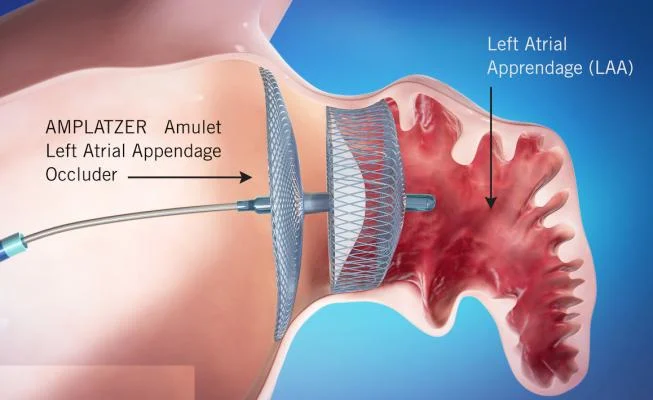
Left atrial appendage (LAA) closure is a procedure performed to reduce the risk of stroke in patients with atrial fibrillation (AF). The left atrial appendage is a small, pouch-like extension of the left atrium, and it is the principal site where blood clots form in patients with atrial fibrillation. These clots may travel to the brain and increase the risk of stroke.
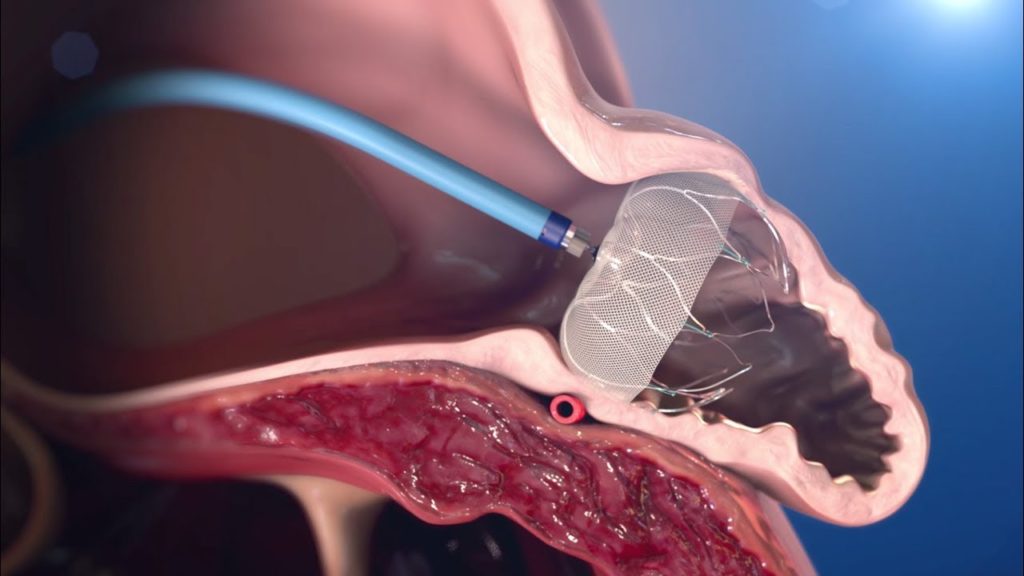
LAA closure is an important alternative for patients who cannot take blood-thinning medication (anticoagulants) or who do not wish to take it. This minimally invasive method is performed through a catheter using dedicated closure devices.
How Is It Performed?
LAA closure is usually performed through a catheter introduced from the groin (femoral vein). The catheter is advanced to the right side of the heart, and the interatrial septum (the wall between the two atria) is then crossed by transseptal puncture to gain access to the left atrium. Once the left atrial appendage has been reached, a dedicated closure device (occluder) is deployed. The device seals the appendage completely and thereby prevents blood clots from forming within it.
The procedure is performed under general anesthesia, with echocardiographic guidance — in particular transesophageal echocardiography (TEE) — and fluoroscopy. It usually takes between 1 and 2 hours.
Who Is It Suitable For?
- Patients with a diagnosis of atrial fibrillation (AF)
- Patients who cannot take anticoagulant (blood-thinning) medication (warfarin, dabigatran, rivaroxaban, etc.)
- Patients in whom anticoagulant therapy carries a high risk of bleeding
- Patients who have had a stroke despite anticoagulant therapy
- Patients who do not wish to take anticoagulant therapy
- Patients whose LAA anatomy is suitable for closure
- Patients at high risk of stroke (a high CHA2DS2-VASc score)
Advantages
- Substantially reduces the risk of stroke
- Removes the need for long-term anticoagulant (blood-thinning) medication
- Reduces the risk of bleeding
- A minimally invasive method
- Does not require open heart surgery
- Short recovery time
- Improves quality of life
Pre-procedural Evaluation
A detailed evaluation is carried out before the LAA closure procedure. This evaluation includes:
- Echocardiography (transthoracic and transesophageal)
- Computed tomography (CT) or cardiac MRI
- Blood tests (coagulation parameters)
- Calculation of the CHA2DS2-VASc score
The anatomy, dimensions and shape of the LAA, together with the structures surrounding it, are assessed in detail. This evaluation is of critical importance for selecting the appropriate device and for planning the procedure.
After the Procedure
Patients are usually discharged within 1 to 2 days of LAA closure. Antiplatelet therapy (aspirin and clopidogrel) is recommended for the first 45 days after the procedure. At the end of this period, once endothelialization of the device (the covering of the device by the body's own tissue) is complete, this medication is usually discontinued.
Regular follow-up after the procedure is important. Follow-up echocardiography is usually performed at 45 days, 6 months and 1 year. The position of the device, whether any leak around the device is present, and the state of endothelialization are assessed.
Clinical Significance
LAA closure is an important component of the stroke prevention strategy in patients with atrial fibrillation. It is a life-saving option particularly for patients who cannot take blood-thinning medication. This minimally invasive method markedly improves patients' quality of life and reduces the risk of stroke to a degree comparable with that achieved by blood-thinning medication.
Prof. Dr. Teoman Kılıç and his team practice at one of the most experienced centers for LAA closure and have achieved successful outcomes in this field.
Last updated: October 13, 2026