Pulmoner Hipertansiyon
Pulmoner hipertansiyon (PH), akciğerlere kan taşıyan atardamarlardaki basıncın yükselmesidir.
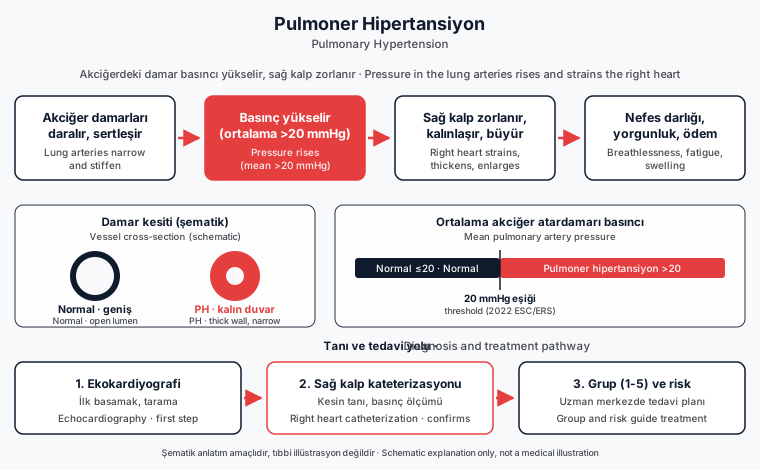
Pulmonary hypertension (PH) means raised pressure in the arteries that carry blood to the lungs. In the 2022 ESC/ERS guidelines it is defined as a resting mean pulmonary arterial pressure (mPAP) above 20 mmHg, measured at right heart catheterisation; this threshold was lowered from the mPAP ≥25 mmHg used in the 2015 guidelines. When the lung vessels narrow and undergo structural change, the right side of the heart has to work harder to pump blood through the lungs, and if left untreated the condition can progress towards right heart failure.
PH is not a single disease
The 2022 ESC/ERS guidelines divide PH into five clinical groups: pulmonary arterial hypertension, which affects the lung vessels themselves (PAH, Group 1); PH associated with left heart disease (Group 2); PH associated with lung diseases and/or hypoxia (Group 3); PH associated with pulmonary artery obstructions, including chronic thromboembolic PH (Group 4); and PH with unclear and/or multifactorial mechanisms (Group 5). PAH, which patients often confuse with PH in general, is one subgroup of PH. Worldwide the most common cause of PH is left heart disease, followed by lung diseases, particularly COPD.
PH affects every age group; current estimates point to a prevalence of about 1% of the global population, and higher above the age of 65 (2022 ESC/ERS). Congenital heart disease, connective tissue (rheumatic) disease, liver disease, HIV infection, chronic lung disease (COPD, lung fibrosis, sleep apnoea), a history of blood clots in the lung vessels, certain drugs and toxins, and genetic predisposition may all raise the risk.
Symptoms
Symptoms are mainly linked to right ventricular dysfunction and typically appear on exertion early in the disease. The cardinal symptom is breathlessness on progressively less effort. Other symptoms listed in the guidelines include:
- fatigue and exhaustion
- breathlessness when bending forward (bendopnoea)
- palpitations
- coughing up blood (haemoptysis)
- abdominal distension and nausea on exertion
- weight gain from fluid retention
- fainting (syncope) during or shortly after exertion
Where the pulmonary artery is enlarged, exertional chest pain, hoarseness, wheezing and cough may rarely occur as well.
How the diagnosis is made
Echocardiography is the recommended first-line, non-invasive investigation when PH is suspected (2022 ESC/ERS; Class I, Level of evidence B). An "echocardiographic probability of PH" is assigned from the tricuspid regurgitation velocity and other supportive signs. However, the guidelines state clearly that echocardiography alone is not sufficient to confirm a diagnosis of PH. Right heart catheterisation is the gold standard for diagnosing and classifying PH (Class I, B) and is recommended to be performed in experienced centres (Class I, C). In PH centres, the rate of serious adverse events is reported as 1.1% and procedure-related mortality as 0.055%; the guidelines describe these rates as low.
What happens next
After diagnosis, disease severity is graded with a panel that includes clinical assessment, exercise testing, biochemical markers, echocardiography and haemodynamic measurements (Class I, B). At follow-up, a four-strata risk tool based on WHO functional class, 6-minute walking distance and NT-proBNP is used; the 1-year mortality rates observed in this model are 0–3%, 2–7%, 9–19% and above 20% respectively. Reaching and maintaining a low-risk profile on optimised therapy is recommended as a treatment goal (Class I, B).
Treatment depends on the group. Supportive care includes supervised exercise training in PAH patients on medical therapy (Class I, Level A), psychosocial support, immunisation against SARS-CoV-2, influenza and pneumococcus (Class I, C), and diuretics where there is fluid retention; patients should be clinically stable before starting rehabilitation. The drug classes used in Group 1 PAH are endothelin receptor antagonists, phosphodiesterase-5 inhibitors, a soluble guanylate cyclase stimulator, and prostacyclin pathway agents; the choice is made by the physician according to risk status. In chronic thromboembolic PH, lifelong therapeutic anticoagulation and review of every patient by a CTEPH team are recommended (Class I, C); pulmonary endarterectomy is the treatment of choice for surgically accessible obstructions (Class I, B), and balloon pulmonary angioplasty is recommended for suitable patients who are technically inoperable or who have residual PH after surgery (Class I, B) — balloon treatment complements rather than replaces surgery.
When to see a doctor
The time from symptom onset to a diagnosis of PH still exceeds 2 years, as symptoms are often attributed to ageing, lack of fitness or more common conditions. If you have breathlessness that worsens with exertion and appears on progressively less effort, easy fatigue, palpitations, weight gain from fluid retention or fainting during exertion, you should consult your doctor. When echocardiography shows an intermediate or high probability of PH, or when risk factors for PAH or a history of pulmonary embolism are present, referral to a PH centre for further assessment is recommended (2022 ESC/ERS, Section 5.1 and Figure 6); the guidelines recommend that PH centres provide care through a multidisciplinary team (Class I, C). The information on this page is for general education only; decisions about diagnosis, treatment and follow-up are made solely by the physician who assesses you.
Sources
This page has been compiled from the guidelines and publications below. It is for information only and does not replace your physician's advice.
- European Society of Cardiology (ESC) / European Respiratory Society (ERS) — 2022 ESC/ERS Guidelines for the diagnosis and treatment of pulmonary hypertension, Eur Heart J 2022;43:3618–3731,
- ESC/ERS — 2022 ESC/ERS Guidelines for the diagnosis and treatment of pulmonary hypertension, Eur Heart J 2022;43:3618–3731, Tablo 5 ve Bölüm 3.1
- ESC/ERS — 2022 ESC/ERS Guidelines for the diagnosis and treatment of pulmonary hypertension, Eur Heart J 2022;43:3618–3731, Bölüm 3.1
- ESC/ERS — 2022 ESC/ERS Guidelines for the diagnosis and treatment of pulmonary hypertension, Eur Heart J 2022;43:3618–3731, Tablo 6
- ESC/ERS — 2022 ESC/ERS Guidelines for the diagnosis and treatment of pulmonary hypertension, Eur Heart J 2022;43:3618–3731, Bölüm 5.1.1 ve Şekil 2
- Türk Toraks Derneği Klinik Sorunlar Çalışma Grubu — '5 Mayıs Dünya Pulmoner Hipertansiyon Günü' basın bildirisi, 2026
- ESC/ERS — 2022 ESC/ERS Guidelines for the diagnosis and treatment of pulmonary hypertension, Eur Heart J 2022;43:3618–3731, Bölüm 4 (Epidemiyoloji)
- ESC/ERS — 2022 ESC/ERS Guidelines, Eur Heart J 2022;43:3618–3731, Bölüm 5.3; ayrıca Türk Toraks Derneği, Dünya PH Günü basın bildirisi, 2026
- ESC/ERS — 2022 ESC/ERS Guidelines, Eur Heart J 2022;43:3618–3731, Bölüm 5.1.5 ve Öneri Tablosu 2
- ESC/ERS — 2022 ESC/ERS Guidelines, Eur Heart J 2022;43:3618–3731, Bölüm 5.1.12 ve Öneri Tablosu 1
Last updated: October 13, 2026