Kalp Krizi
Kalp krizi (miyokart enfarktüsü), kalbi besleyen koroner atardamarlardan birinin aniden tıkanması sonucu kalp kasının kansız kalması ve kalp kasında ölü doku…
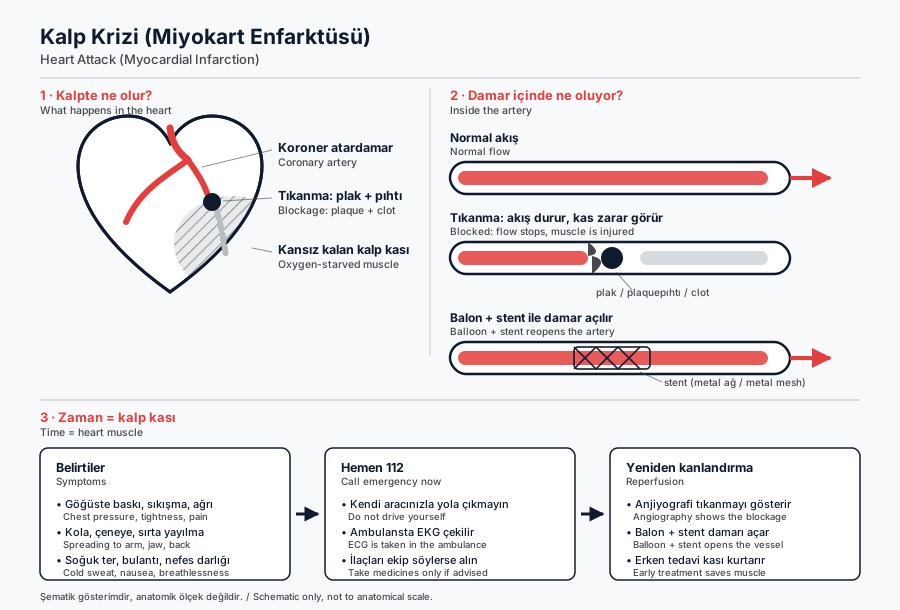
What is a heart attack?
A heart attack (myocardial infarction) occurs when one of the coronary arteries supplying the heart becomes suddenly blocked, so that part of the heart muscle is deprived of blood and dead tissue forms in the muscle. The sooner blood flow to the heart muscle is restored, the less damage occurs, which is why rapid and early treatment is vitally important (Turkish Society of Cardiology patient information booklet, 2015).
What are the symptoms?
The leading presenting symptom is discomfort in the chest, which patients may describe as pain, pressure, tightness, heaviness or burning (2023 ESC Guidelines for the management of acute coronary syndromes). The discomfort may be in the centre or on the left side of the chest and may spread to the arms, back, shoulders, neck, jaw or upper abdomen.
According to the 2023 ESC guidelines, the chest pain-equivalent symptoms that may occur instead of chest pain are:
- Shortness of breath (dyspnoea)
- Epigastric (upper stomach) pain
- Pain in the left or right arm or in the neck/jaw
Other symptoms reported in heart attack include the following (NHLBI patient information):
- Shortness of breath at rest or with mild exertion
- Sweating a lot for no reason
- Nausea and vomiting
- Light-headedness or sudden dizziness
- A rapid or irregular heartbeat
A heart attack can also occur with mild symptoms or with none at all. Symptoms may differ between women and men; women more often report feeling unusually tired for no reason, sometimes for days (NHLBI patient information). The 2023 ESC guidelines recommend that the descriptor "atypical" be avoided and that chest pain instead be classified as "cardiac", "possibly cardiac" or "likely non-cardiac". Because misdiagnosis or delayed diagnosis is sometimes due to an incomplete history, it is important to describe everything you experience to your doctor in detail.
What should you do if you suspect a heart attack?
Prolonged chest pain lasting more than 15 minutes and/or pain recurring within 1 hour is a warning sign that should prompt you to seek urgent medical help (2023 ESC guidelines). When a squeezing, pressing pain begins in the chest and spreads to the arms, shoulders, neck, jaw or upper abdomen, emergency medical services (112 in Türkiye) should be called immediately (Turkish Society of Cardiology, 2015).
- Call for emergency medical care even if you are not sure it is a heart attack; do not wait to see whether the symptoms pass.
- Contact the emergency medical service directly rather than your family doctor or an outpatient clinic.
- Do not drive to the hospital yourself and do not let someone else drive you. The ambulance team can start treatment before you reach hospital, and people who arrive by ambulance often get faster treatment at the hospital (NHLBI).
What happens at the hospital?
It is recommended that an ECG be obtained immediately upon first medical contact and interpreted within 10 minutes by a qualified emergency medical technician or physician. Time to treatment is decisive: system delay is a predictor of mortality in STEMI patients treated with primary percutaneous coronary intervention (2023 ESC guidelines).
If the ECG shows the type of heart attack called STEMI, the preferred reperfusion strategy is primary PCI (immediate angiography and PCI as needed), and it should be performed within 120 minutes of the ECG-based diagnosis — an absolute 120 minutes from diagnosis to wire crossing of the blocked artery. When the delay to treatment is similar, primary PCI is superior to fibrinolysis in reducing mortality, non-fatal reinfarction and stroke. If primary PCI cannot be performed in a timely manner, fibrinolytic (clot-dissolving) therapy is indicated for patients presenting within 12 hours of symptom onset; the goal is to start it within 10 minutes of the STEMI diagnosis, and it should not be delayed by waiting for cardiac biomarker (troponin) results. For a patient who must be transferred, a door-in to door-out time of 30 minutes or less is recommended. For patients presenting more than 12 hours after symptom onset, a primary PCI strategy is preferred over fibrinolysis in all cases.
Remember
Acting fast can limit damage to your heart and save your life; every minute matters. The information on this page is for general education and does not replace individual medical advice. For decisions about your own diagnosis and treatment, please consult your own physician.
Sources
This page has been compiled from the guidelines and publications below. It is for information only and does not replace your physician's advice.
- Türk Kardiyoloji Derneği — 'TKD Bilgilendiriyor… KALPTEN DESTEK: Kalp Krizi ve Perkütan Koroner Girişim Sonrası Hasta Bilgilendirme Kitapçığı', 2015, Bölüm I
- 2023 ESC Guidelines for the management of acute coronary syndromes, European Heart Journal 2023;44(38):3720-3826, Bölüm 3.1.1
- Türk Kardiyoloji Derneği — 'KALPTEN DESTEK' Hasta Bilgilendirme Kitapçığı, 2015, Bölüm I
- 2023 ESC Guidelines for the management of acute coronary syndromes, European Heart Journal 2023;44(38):3720-3826, Bölüm 4.1.1 ve 4.1.4
- National Heart, Lung, and Blood Institute (NIH) — 'Heart Attack: Symptoms' hasta bilgilendirme sayfası (NHLBI, erişim 2026)
- 2023 ESC Guidelines for the management of acute coronary syndromes, European Heart Journal 2023;44(38):3720-3826, Bölüm 4.1.1 ve 4.1.2
- 2023 ESC Guidelines for the management of acute coronary syndromes, European Heart Journal 2023;44(38):3720-3826, Bölüm 3.2
- 2023 ESC Guidelines for the management of acute coronary syndromes, European Heart Journal 2023;44(38):3720-3826, Bölüm 5.1 ve 5.2.1
- 2023 ESC Guidelines for the management of acute coronary syndromes, European Heart Journal 2023;44(38):3720-3826, Bölüm 5.2.1 ve 5.3.1
Last updated: October 13, 2026