Aort Koarktasyon Tedavisi
Kasık bölgesindeki atardamar aortaya ulaşmamızı sağlayan ana damarlardan bir tanesidir. Anjiyografi laboratuarında, küçük bir iğne ile kasık atardamarına girilerek bir adet kılıf yerleştirilir.
How is the closed therapy applied?
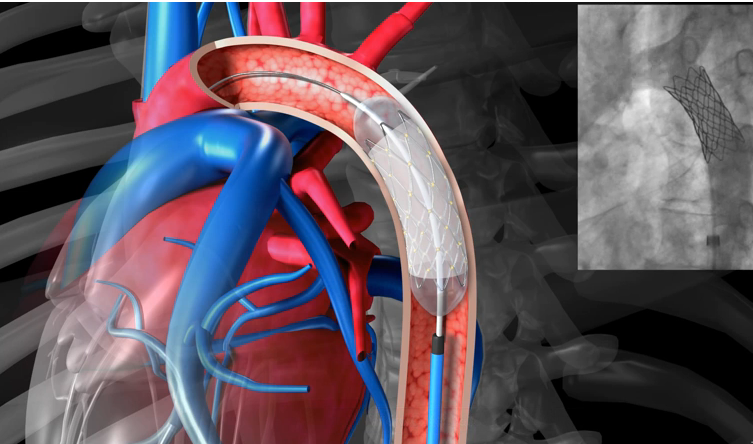
The groin artery is one of the main vessels for us to reach to the aorta. We make little puncture by a small needle to the femoral artery put a sheath in it. We sent special catheters and guidewires from femoral artery to the aorta. We pass through the coarctation with a special guidewire. Then, we put an extrastiff guidewire and over the guidewire a special balloon is sent to the level of coarctation. The balloon is gently and partially inflated in adult patients due to the risk of rupture. Then, a special graft stent is sent to the coarctation andinflated by balloon in balloon technique and the stent will cover the area of the coarctation.
Is there any complication of percutanoeus teratment of aortic coarctation?
Complications of this closed therapy is very rare compared to open surgery. In adult patients, the duration of the coarctation is long and there are several collaterals. Due to the presence of these collateral arteries, bleeding risk higher in open surgery and there is a risk of paraplegia during closure of spinal collateral or intestinal ischemia. Thus, open surgery is recommended in neonatal period or eraly childhood period but percutaneous treatment is the ideal therapy for adults. Compared to open surgery, this method has important advantages. The hospital stay period is shorter, recovery is quick and complications are rare. The complications related to open heart surgery such as bleeding, trauma to great vessels or structures are not seen. Cosmetic superiority is also high because we do not open the chest. Recurrent narrowing or aneurysm formation can develop after the percutaneous therapy but redo balloon therapy can be easily done. But these complications are very rare especially after the graft stent implantation.
Last updated: June 2, 2026